Cosmetic Dentistry
Teeth Whitening Cost in Hyderabad: Options, Price Factors and What to Expect
Understand what affects teeth whitening cost in Hyderabad, the available professional options, inclusions, limitations, aftercare and suitability.
By The Dental Experts team · · Updated
Teeth whitening cost in Hyderabad: the short answer
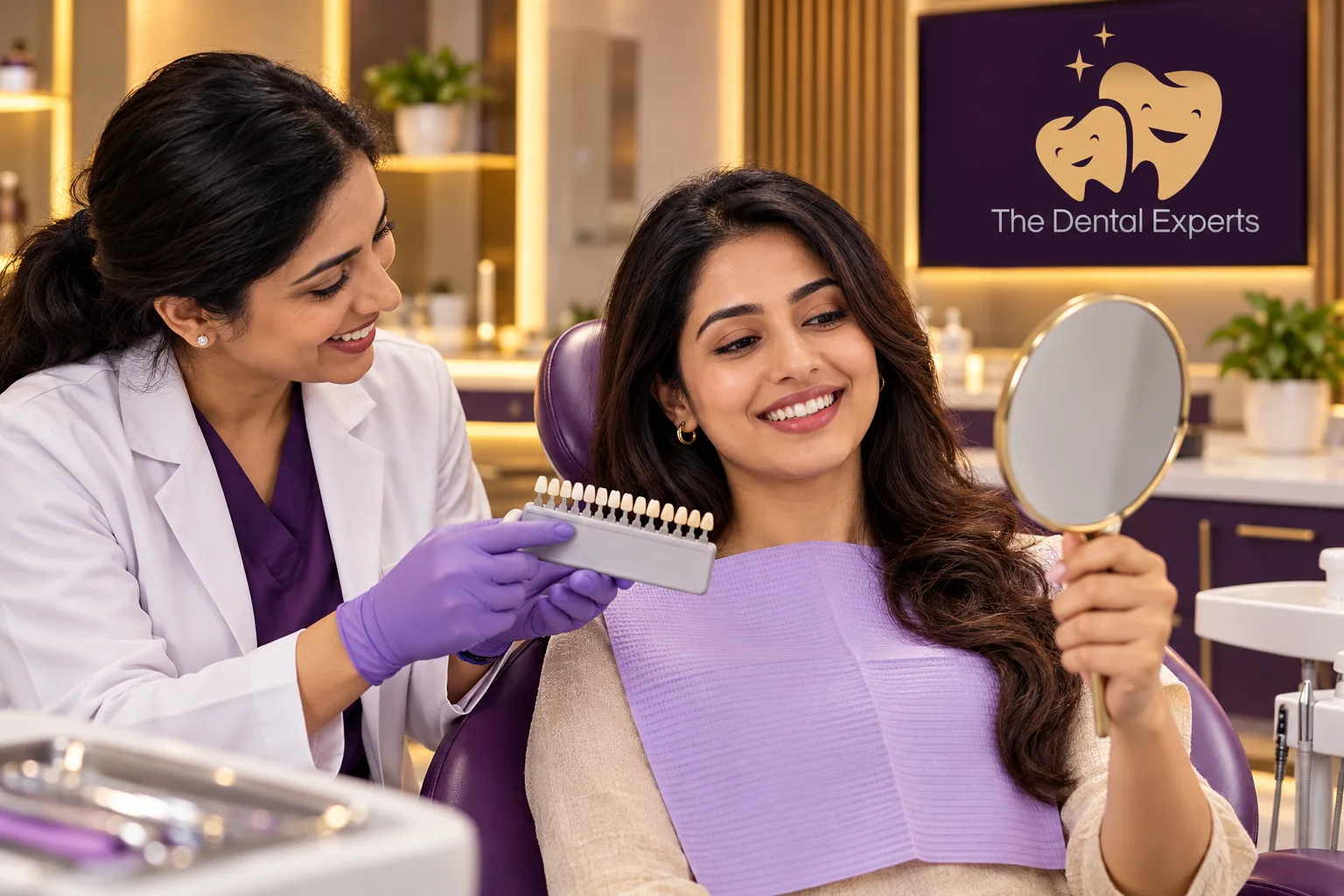
The Dental Experts is a dental clinic in Nanakramguda, Hyderabad, serving patients from nearby Financial District, Gachibowli, Khajaguda, Kokapet, Narsingi and Manikonda. Professional teeth whitening is intended to lighten the appearance of natural teeth using a controlled whitening agent after assessing the teeth and gums.
There is no single responsible teeth whitening price that applies to every patient before an examination. Cost depends on the professional method used, the number of sessions, the starting shade and type of staining, whether customised trays or take-home material are included, and whether cleaning or other dental care is required first. Final cost therefore needs a case-by-case clinical assessment.
When comparing quotations, ask whether the amount covers the examination, baseline shade assessment, gum protection, whitening material, all planned sessions, customised trays if relevant, desensitising care, review and any take-home maintenance product.
What affects the cost of professional teeth whitening?
The whitening method is a major factor. In-clinic whitening uses professionally selected material and controlled application during a dental visit. Dentist-supervised home whitening generally uses customised trays and prescribed material over a planned period. Some treatment plans combine both approaches. These are different services and should not be compared only by their headline price.
The number and length of sessions may vary with the starting shade, the cause of discolouration, sensitivity risk and the patient’s goal. More treatment is not automatically better: the dentist should explain the realistic shade change and stop within appropriate clinical limits.
Existing oral health can also change the plan. Plaque, tartar and surface stains may need professional cleaning first. Cavities, leaking fillings, cracked teeth, gum inflammation or exposed roots may need attention before whitening because they can affect comfort, safety and the final appearance.
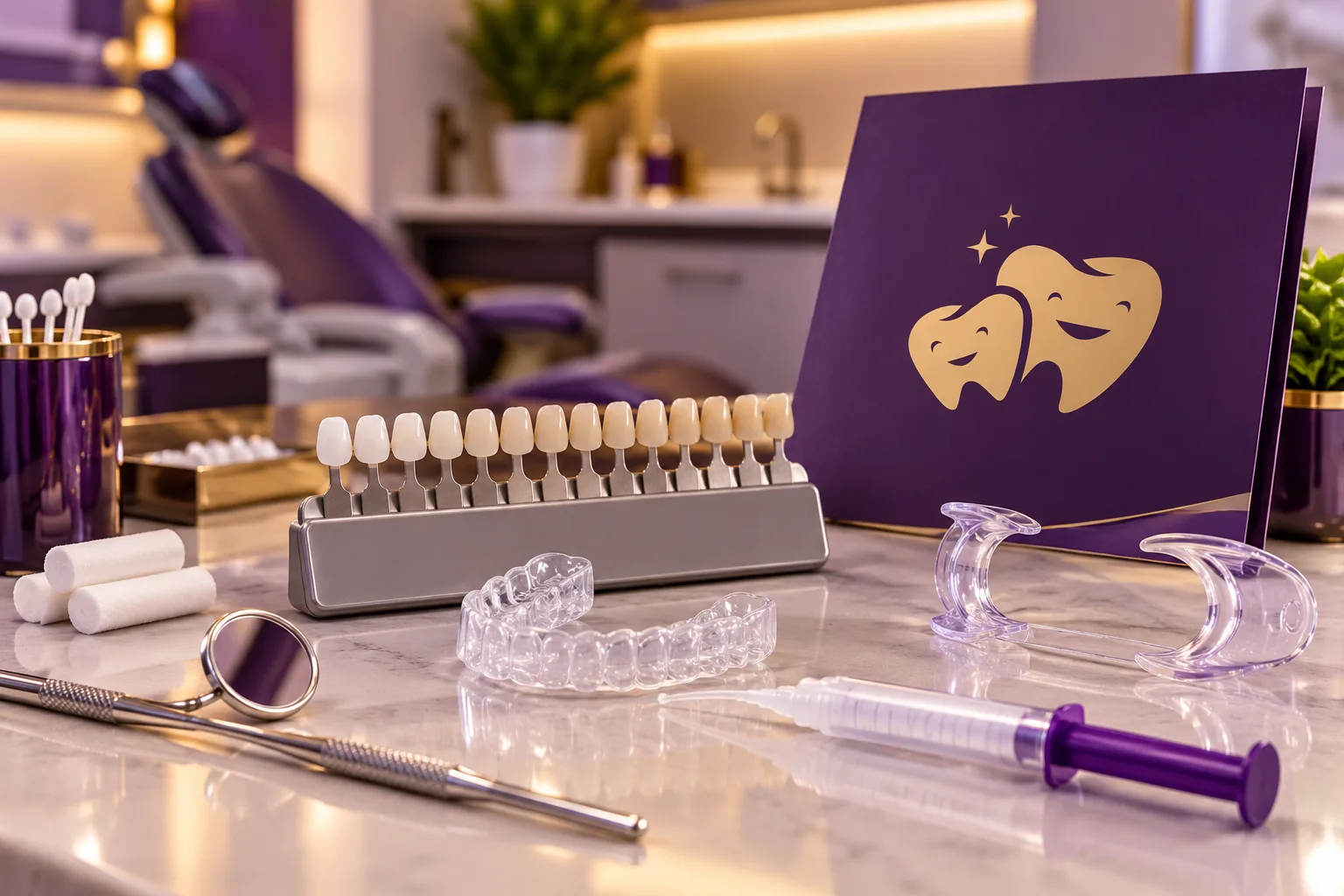
Other possible cost components include photographs or shade records, customised trays, additional gel syringes, desensitising products and a later maintenance session. Ask which of these are included and which would be charged separately.
Professional whitening, cleaning and polishing are different
Dental cleaning removes plaque and hardened deposits. Polishing can reduce some external surface staining. Teeth whitening uses a bleaching agent to lighten colour within natural tooth structure. A person may feel the teeth look brighter after cleaning, but cleaning does not produce the same type of shade change as whitening.
If surface deposits or stain are the main problem, cleaning may be the appropriate first step. If the natural tooth colour remains darker than desired after the teeth are clean and healthy, professional whitening may then be considered.
Whitening also differs from veneers or crowns. Veneers and crowns are restorations that cover tooth structure; whitening aims to change the shade of natural teeth without placing a restoration.
Who may be suitable for teeth whitening?
Whitening may be considered by adults with healthy teeth and gums who want to reduce general yellowing or selected food, beverage or tobacco-related discolouration. Suitability depends on the cause of the colour change, the condition of enamel and dentine, tooth sensitivity, existing restorations and the patient’s expectations.
A single dark tooth can have a different cause from generalised staining. Previous trauma, root canal treatment, developmental changes, decay or an old restoration may require investigation and a different approach. Whitening should not be used to hide an undiagnosed dental problem.
Pregnancy, active gum disease, untreated cavities, cracks, marked sensitivity or extensive restorations can affect timing or suitability. The dentist should review medical and dental history before recommending treatment.
How professional whitening works
Whitening agents interact with coloured molecules within natural tooth structure, making the overall shade appear lighter. The response varies between people and between different types of staining, so an exact final shade cannot be promised.
Before treatment, the dentist examines the mouth and records the starting shade when appropriate. During in-clinic whitening, the gums and soft tissues are protected before the whitening material is applied to the teeth for controlled intervals. Dentist-supervised home treatment uses fitted trays and instructions for the amount and duration of use.
What whitening can and cannot change
Professional whitening can lighten many natural teeth, but it does not change the colour of ceramic crowns, veneers, composite fillings or other tooth-coloured restorations. If these restorations are visible, they may look mismatched after the surrounding natural teeth lighten.
Some internal or developmental stains respond less predictably. In such cases, the dentist may discuss additional whitening, internal whitening for a suitable root-treated tooth, bonding, veneers or another restorative option. The more invasive option should not be chosen until conservative possibilities and their limitations have been explained.
Whitening cannot make every tooth identical, correct crowding, close a structural gap, reshape worn edges or treat gum disease. It also cannot guarantee a permanently fixed shade because natural ageing and exposure to staining foods, drinks or tobacco continue.
Benefits and limitations
The main advantage of whitening is that it can change the appearance of natural tooth colour without covering the teeth with restorations. A dentist-led plan also allows the mouth to be checked beforehand and sensitivity risk to be considered.
Temporary tooth sensitivity and gum irritation can occur. The likelihood and intensity vary with the material, concentration, exposure time, existing sensitivity and the condition of the teeth. Patients should follow the prescribed schedule rather than using more product or extending treatment on their own.
Results differ, and repeated whitening should not be treated as unlimited maintenance. Excessive or poorly controlled use can increase unwanted effects without providing a proportional cosmetic benefit.
Aftercare and maintaining the result
Follow the dentist’s instructions about food, drinks and oral hygiene after treatment. Because teeth may be temporarily sensitive, some patients are advised to use a sensitivity toothpaste or adjust the whitening schedule. Report severe or persistent sensitivity rather than continuing treatment automatically.
Brush twice daily with fluoride toothpaste, clean between the teeth and attend dental reviews based on individual oral-health needs. Tea, coffee, tobacco and other staining exposures can affect how long the result appears stable.
Maintenance should be personalised. If take-home trays are supplied, use only the prescribed material and amount. Do not substitute stronger products or extend wear time without professional advice.
How to compare whitening quotations fairly
Confirm whether the quotation is for a single in-clinic session, a series of visits, customised home trays or a combined plan. Ask which material and concentration category is being used, how many applications are planned and what happens if the teeth reach their safe response before every proposed session.
Check whether examination, cleaning, shade records, gum protection, sensitivity management, trays, extra gel and review are included. Also ask whether any visible fillings, crowns or veneers might need separate treatment for a colour match after whitening.
A low advertised amount may cover only one component, while another quotation may include examination and supervised maintenance. Comparing scope, suitability and follow-up is more useful than comparing the number alone.
Common questions about teeth whitening
Is teeth whitening the same as dental cleaning? No. Cleaning removes deposits and some surface stains; whitening aims to lighten the colour of natural teeth.
Will whitening work on crowns, veneers or fillings? No. Existing restorations do not whiten like natural teeth and may need separate planning if a colour mismatch is likely.
How white will my teeth become? Response varies with the starting shade and cause of discolouration. A dentist can discuss a realistic range of change, but an exact shade cannot be guaranteed.
Can whitening cause sensitivity? Temporary sensitivity is a recognised possible effect. The dentist may modify concentration, exposure time or frequency and recommend sensitivity care based on the individual case.
Can I get an exact teeth whitening cost over the phone? A preliminary indication may be possible, but the final plan depends on the condition of the teeth and gums, the cause of discolouration, the chosen method and what the package includes. Final cost requires case-by-case clinical assessment.
Where is The Dental Experts located? The clinic is in Nanakramguda, Hyderabad, and welcomes patients from nearby Financial District, Gachibowli, Khajaguda, Kokapet, Narsingi and Manikonda.
Sources and further reading
This article provides general information and does not replace an individual dental examination.
← All articles