Preventive Dentistry
Teeth Cleaning Cost in Hyderabad: What Affects It and What’s Included
Understand what affects teeth cleaning cost in Hyderabad, how routine cleaning differs from deep cleaning, what may be included and why assessment matters.
By The Dental Experts team ·
Teeth cleaning cost in Hyderabad: the short answer
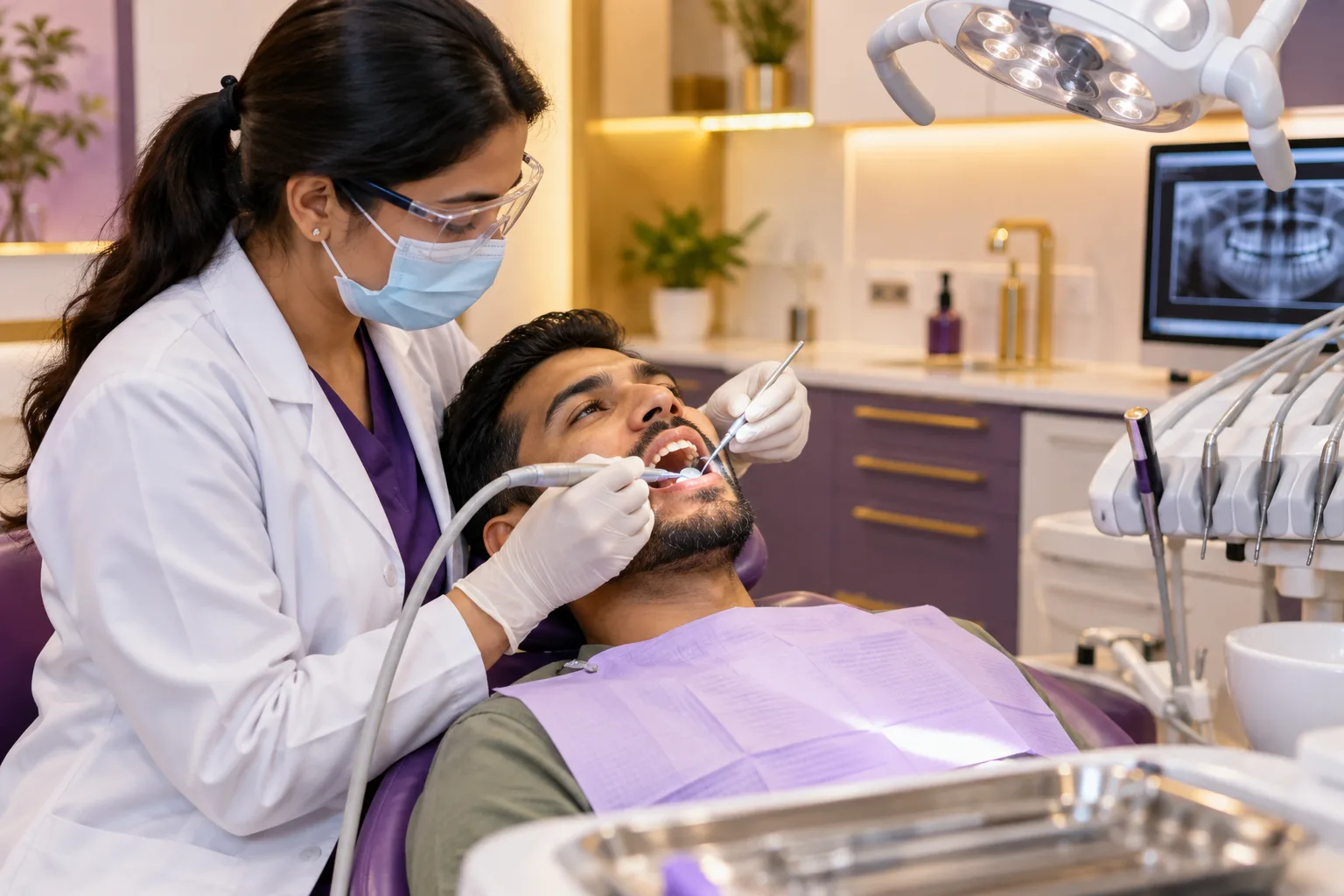
The Dental Experts is a dental clinic in Nanakramguda, Hyderabad, serving patients from the surrounding Financial District, Gachibowli, Khajaguda, Kokapet, Narsingi and Manikonda areas. Professional cleaning is planned after examining the teeth and gums, because what one person calls “cleaning” may range from routine scaling and polishing to treatment for gum disease.
There is no single honest cost that applies to every patient before an assessment. The final teeth cleaning cost depends mainly on the amount and location of plaque and tartar, gum health, whether routine cleaning or deeper periodontal treatment is needed, the number of visits, and which items are included. A clinical examination is therefore required for a case-by-case estimate.
What usually affects teeth cleaning cost?
Routine scaling for light or moderate deposits is different from cleaning around deeper gum pockets. If tartar extends below the gumline or there are signs of periodontitis, the dentist may advise scaling and root planing rather than a standard cleaning. That is a more involved procedure and may be completed by area or over more than one visit.
Other variables include heavy staining or calculus, gum bleeding or tenderness, whether local anaesthesia is appropriate, the need for dental X-rays or periodontal measurements, and whether polishing or another preventive step is included. Patients comparing quotations should ask whether consultation, X-rays, polishing, taxes and any follow-up are part of the stated amount.
Because these factors cannot be judged reliably from a photograph or phone description alone, this article does not publish a fixed clinic price or claim a citywide average. The dentist can explain the recommended type of cleaning and its inclusions after examining the mouth.
Routine cleaning and deep cleaning are not the same
Routine professional cleaning generally removes plaque, hardened tartar and accessible surface deposits from the teeth, followed by polishing when clinically appropriate. It supports preventive care, but it does not replace daily brushing, interdental cleaning or treatment for active dental disease.
Deep cleaning—commonly called scaling and root planing—is intended for selected patients with gum disease and deposits below the gumline. It may involve treating separate areas of the mouth, local anaesthesia and planned review. If a quotation for deep cleaning is higher than one for routine scaling, the difference should reflect the diagnosis and treatment scope rather than merely the name of the service.
A professional cleaning can improve surface cleanliness and remove some external stains, but it is not the same as teeth whitening. Whitening changes the appearance of tooth colour using a separate treatment, while polishing mainly addresses surface stain.
Who may benefit from a dental cleaning assessment?
An assessment is sensible when tartar is visible near the gumline, the gums bleed during brushing, breath remains unpleasant despite regular oral hygiene, or the teeth have accumulated surface stains. It is also useful before beginning certain restorative, orthodontic or cosmetic treatments when the dentist wants the gums to be healthy and the tooth surfaces clean.
Bleeding gums should not automatically be treated as a request for routine polishing. They can be associated with gingivitis or more advanced gum disease, so the dentist may measure the gums, look for inflammation and assess bone support before recommending the appropriate treatment.
Urgent swelling, pus, fever, facial swelling, severe tooth pain or a loose adult tooth needs prompt dental assessment. Cleaning alone may not address the underlying problem.
What happens during professional teeth cleaning?
The visit usually begins with a review of symptoms and an examination of the teeth and gums. The dentist decides whether the need is routine preventive cleaning or periodontal care. When necessary, gum measurements or dental X-rays may form part of the assessment.
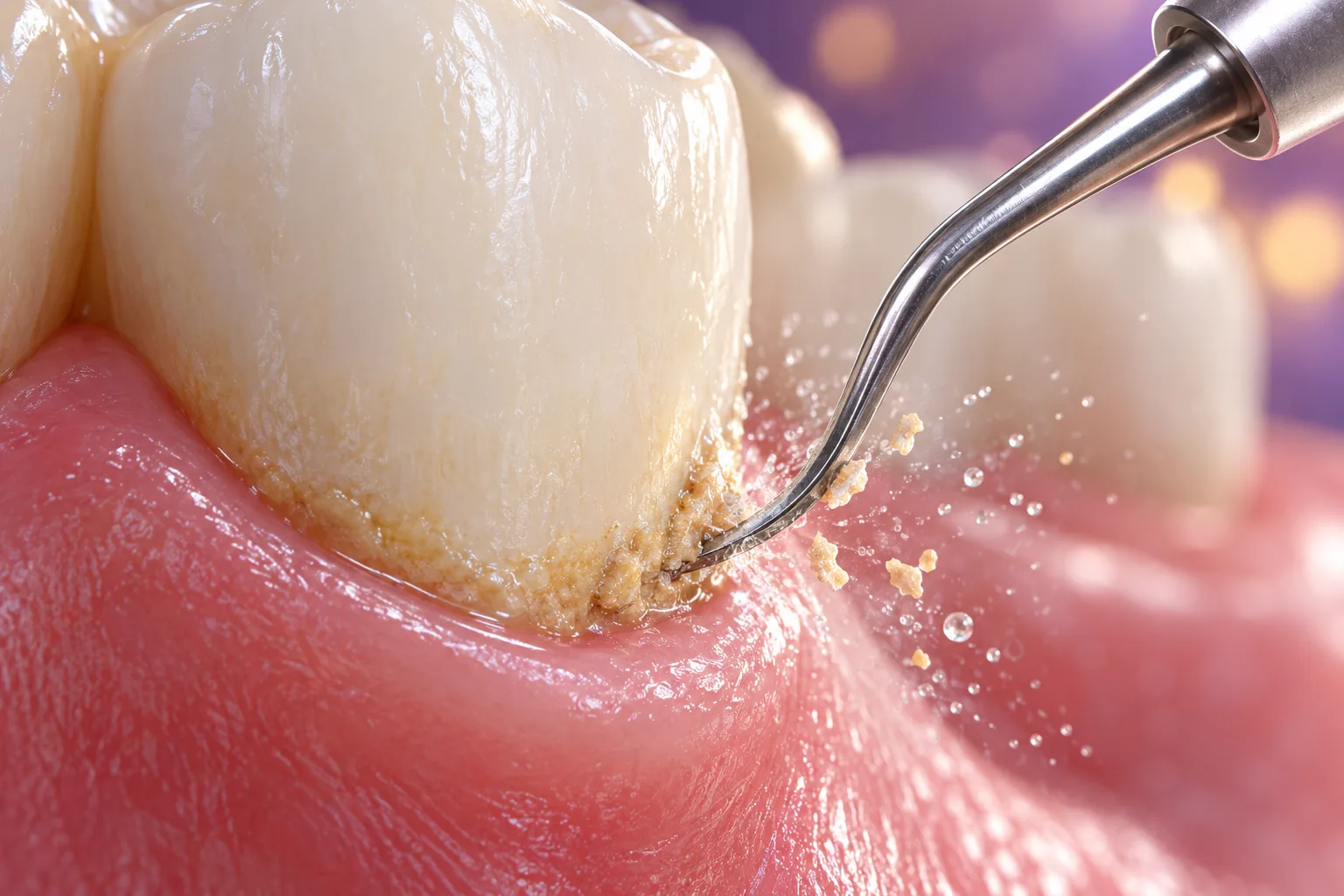
During scaling, hand instruments or an ultrasonic scaler may be used to remove deposits. Water and suction help clear debris. Polishing may follow to smooth the tooth surface and reduce accessible external staining. The exact sequence can vary with gum condition, sensitivity, medical history and the amount of buildup.
If deposits are extensive or the gums are inflamed, treatment may need to be divided into more than one visit. A plan spread over several visits is not automatically excessive; patients should ask what areas are being treated and why.
Benefits and limitations to understand
Professional cleaning removes hardened deposits that cannot be brushed away at home and can support gum health when combined with consistent daily oral hygiene. It also gives the dentist an opportunity to identify concerns that may need separate care.
Cleaning has limits. It does not fill cavities, cure a dental abscess, straighten teeth, replace periodontal surgery when indicated or permanently prevent plaque from returning. It also cannot promise a particular shade improvement because intrinsic tooth colour and deeper stains may remain unchanged.
The result depends partly on home care and risk factors such as smoking, diabetes control, dry mouth, crowding and previous gum disease. Follow-up intervals should therefore be personalised rather than assumed to be identical for every patient.
Aftercare and temporary effects
Some people notice short-lived tooth sensitivity or gum tenderness after cleaning, especially when there was substantial buildup or inflammation. Follow the dentist’s advice, brush gently with a soft-bristled toothbrush, clean between the teeth as instructed and avoid habits that rapidly re-stain the teeth.
If local anaesthesia was used, wait until normal sensation returns before chewing to reduce the chance of biting the lip or cheek. Persistent or worsening pain, swelling, fever or bleeding that does not settle should be reported to the clinic because it may need further assessment.
Questions to ask before comparing cleaning prices
Ask whether the quotation is for routine scaling, scaling with polishing, or periodontal scaling and root planing. Confirm whether examination, gum measurements, X-rays, local anaesthesia, polishing and review visits are included or billed separately.
Also ask how many visits are expected and whether the plan could change after the gums and X-rays are assessed. A clear written treatment plan is more useful than comparing headline prices for procedures that may not have the same scope.
Common questions
How often should teeth be professionally cleaned? The interval should be based on individual risk, gum health, oral hygiene and previous disease. Some patients need closer periodontal maintenance, while others may be reviewed less frequently.
Does teeth cleaning make teeth white? It can remove some external stains and deposits, so the teeth may look cleaner. It does not produce the same shade change as professional whitening.
Can I get an exact teeth cleaning cost without an examination? A preliminary indication may be possible, but the final cost depends on whether the need is routine cleaning or periodontal treatment and on what the plan includes. Final cost requires a case-by-case clinical assessment.
Where is The Dental Experts located? The clinic is in Nanakramguda, Hyderabad. Patients also visit from nearby Financial District, Gachibowli, Khajaguda, Kokapet, Narsingi and Manikonda.
Sources and further reading
This article provides general information and does not replace an individual dental examination.
← All articles