Dental Implants
Dental Implant Cost in Hyderabad: What Changes the Total?
Planning a dental implant in Hyderabad? Learn what affects the total cost, what a quote may include, when grafting may be needed and why assessment matters.
By The Dental Experts team ·
Dental implant cost: the short answer
The Dental Experts is a dental clinic in Nanakramguda, Hyderabad, where patients can have a missing tooth assessed and discuss replacement options. If your first question is “How much does a dental implant cost?”, the useful answer is that there is no responsible single figure before examination and imaging.
The total depends on what your case actually needs: the number and position of missing teeth, the implant system and components selected, the final crown or bridge, the condition of the gums and jawbone, and whether an extraction, bone graft, sinus lift or temporary tooth is part of the plan. A quotation should therefore follow a case-by-case assessment rather than be inferred from a headline price.
Ask for a written plan that separates the implant fixture, abutment and crown and identifies any imaging, temporary restoration, grafting or follow-up charges. This makes different estimates easier to compare on the same basis.
What is included in a dental implant restoration?
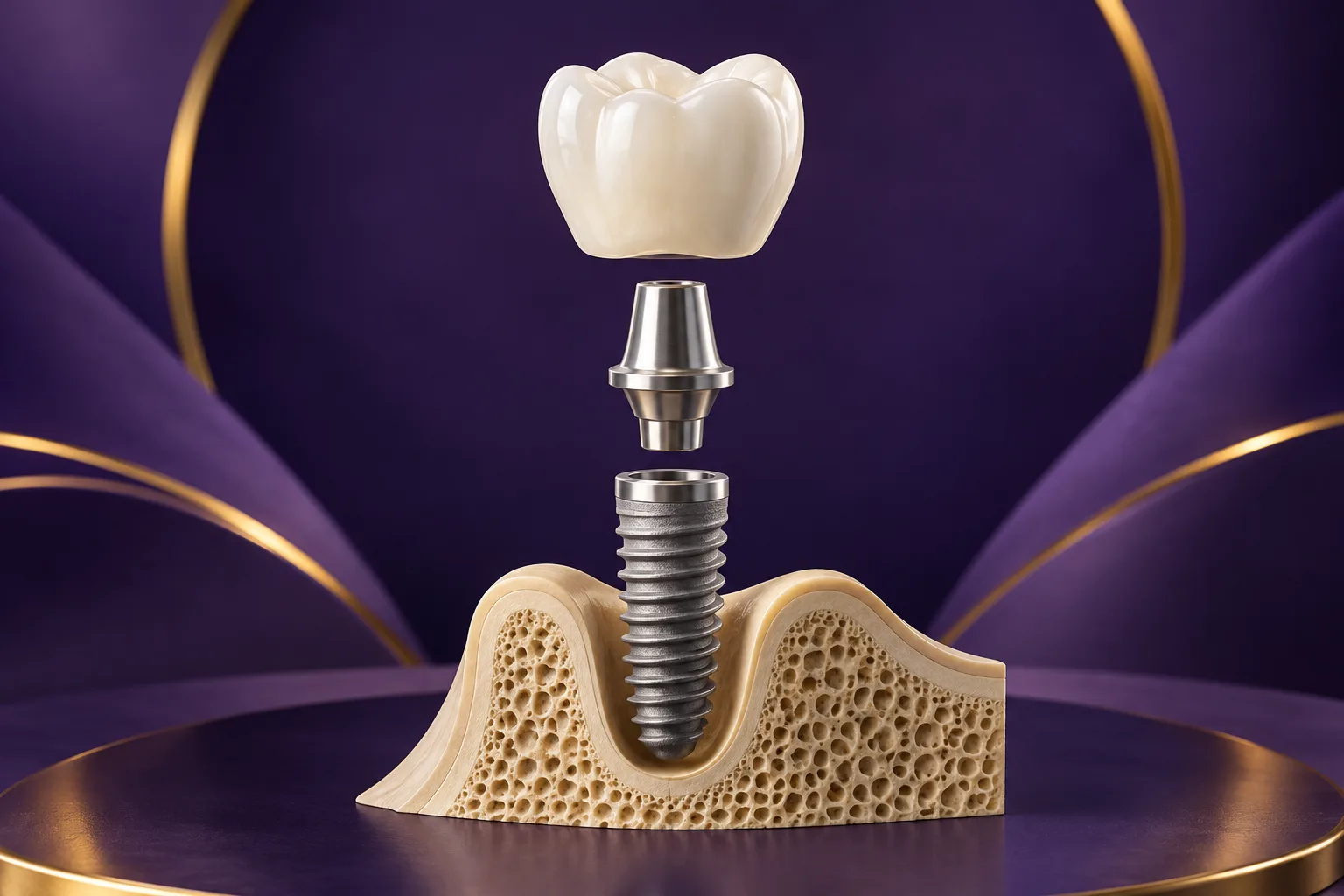
A dental implant is a fixture placed in the jawbone to support a replacement tooth. For one missing tooth, the completed restoration usually involves the implant fixture in the bone, an abutment that connects the parts, and a crown that forms the visible tooth.
Those parts may be planned and billed separately. The crown material, the connection between the implant and crown, laboratory work and the implant brand or component system can all influence the total. A very low advertised figure may refer only to one part rather than the completed tooth.
For several missing teeth, implants may support a bridge or a removable or fixed full-arch restoration. These are different treatment designs with different component counts, planning needs and maintenance requirements, so they should not be compared with a single-tooth implant quote.
Who may consider an implant—and when another option may fit better
An implant may be considered when one tooth, several teeth or all teeth are missing and there is adequate health and support for treatment. It can provide a fixed replacement without preparing neighbouring teeth for a conventional bridge, although suitability and design are individual.
Healthy gum tissue, sufficient bone and the ability to maintain daily plaque control are important. Active gum disease, uncontrolled medical conditions, smoking or other risk factors can affect healing and need to be discussed honestly during planning.
An implant is not the only way to replace a missing tooth. A tooth-supported bridge, removable partial denture, complete denture or, in selected situations, leaving the space under observation may also be discussed. The most appropriate choice depends on oral health, priorities, timing, maintenance and budget—not cost alone.
The main factors that change dental implant cost
Number of implants: replacing one tooth differs from supporting a bridge or full arch. The number of fixtures is not always identical to the number of missing teeth.
Site and complexity: front and back teeth have different aesthetic and loading demands. Available space, bite forces, proximity to anatomical structures and access for placement can change the plan.
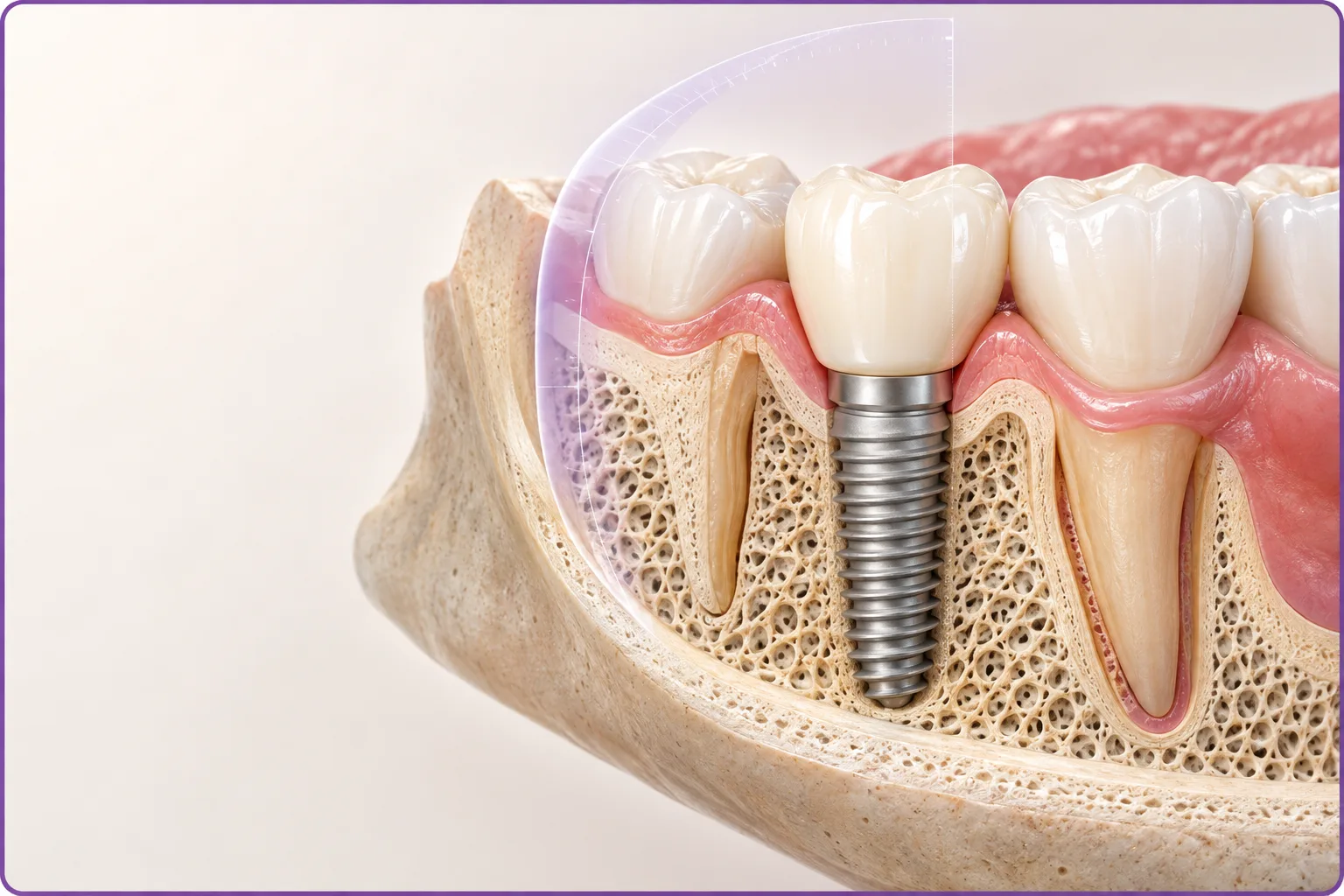
Bone and gum condition: if the ridge is too narrow or deficient, grafting may be considered. Upper back-tooth sites can sometimes require sinus-related augmentation. These procedures are not automatically needed, but when indicated they add materials, treatment stages and healing time.
Restorative components: the abutment design, crown or bridge material, laboratory work and whether a temporary tooth is needed affect the completed restoration.
Diagnostics and clinical steps: consultation, dental X-rays, three-dimensional imaging when clinically indicated, extraction of a failing tooth, sedation when appropriate, medicines, reviews and maintenance may be included or listed separately.
Why examination and imaging matter before a quote
Planning starts with the missing-tooth space, but it also considers the whole mouth. The dentist reviews your concerns and medical history, examines the gums and neighbouring teeth, checks the bite and evaluates whether the proposed restoration can be cleaned.
Dental X-rays are commonly used to assess the area. Three-dimensional imaging may be recommended when it will help evaluate bone dimensions or nearby structures and guide treatment planning; it is not simply an automatic add-on for every person.
This assessment helps distinguish a straightforward site from one that may need extraction management, grafting, periodontal care or a different replacement option. It is also the point at which the sequence, likely time frame and itemised cost can be explained.
What a clear implant quotation should tell you
A useful quotation states whether it covers the implant fixture, surgical placement, cover screw or healing component, abutment, final crown or bridge, laboratory charges and routine review visits.
It should also make exclusions visible. Ask whether consultation and imaging, extraction, grafting materials, a temporary tooth, medicines, sedation, additional scans, maintenance visits or treatment of gum disease are separate.
Clarify what happens if the plan changes after healing or if an additional procedure becomes clinically necessary. A quotation is most meaningful when linked to the documented treatment plan, not when presented as a universal package.
Typical treatment stages and timing
Assessment and planning come first. If the tooth is still present, extraction may happen before implant placement or, in selected cases, at the same appointment. Whether immediate placement is appropriate depends on the site, infection, available bone and the ability to obtain stability.
The implant is placed under local anaesthesia. Healing then allows the bone to integrate with the implant. The time needed varies with the site, bone condition, grafting and individual healing; treatment should not be rushed to meet a generic calendar.
After adequate healing, the restorative stage records the position and bite so the crown, bridge or denture can be made. The final restoration is fitted and checked, followed by hygiene instructions and periodic reviews.
Benefits, limitations and possible complications
A well-planned implant can restore a missing tooth without relying on adjacent teeth for support and can improve chewing and appearance. Implant-supported options can also improve stability for some people who otherwise use removable dentures.
Implants still require surgery, healing time, daily cleaning and long-term professional review. They are not immune to plaque-related inflammation, bone loss, mechanical wear or complications. The crown or other components may need maintenance or replacement over time.
Possible problems include infection, injury to nearby structures, delayed healing, failure of the implant to integrate, loosening or fracture of components, and inflammation around the implant. Your personal risks and alternatives should be discussed before consent.
Aftercare and long-term maintenance
Follow the post-operative instructions provided for your case. Mild soreness and swelling can occur after placement; contact the clinic if pain or swelling is worsening, bleeding does not settle, you develop fever, numbness persists or the implant area feels unusually mobile.
Once restored, clean the implant-supported tooth every day with a toothbrush and the interdental aid recommended for its shape. Cleaning under bridges and around full-arch restorations may require specific brushes, floss threaders or water irrigation as advised.
Keep review and professional-cleaning appointments. The dentist can examine the gums, bite and restoration and use imaging when clinically justified. Good home care and appropriate maintenance are essential even when the implant feels completely comfortable.
Common questions about dental implant cost
Is the crown included in the implant cost? Not always. Some estimates describe the surgical implant only, while others include the abutment and crown. Ask for all three components to be identified.
Does everyone need a bone graft? No. Grafting is considered only when the site lacks the bone needed for the planned implant position or when it supports a specific restorative goal. Imaging and examination guide that decision.
Can an implant and crown be completed in one day? Immediate placement or a temporary tooth is possible in selected cases, but a definitive restoration on the same day is not suitable for everyone. Stability, bone, bite and risk factors determine the timing.
Are implants guaranteed for life? No treatment can responsibly be guaranteed. Outcomes depend on diagnosis, planning, healing, health factors, oral hygiene, maintenance and mechanical demands.
How can I compare two implant quotes? Compare the completed treatment rather than the headline number: diagnostics, implant and abutment, crown or bridge, grafting, temporary restoration, reviews, maintenance and stated exclusions.
Planning an implant consultation in Nanakramguda
The Dental Experts is located in Nanakramguda, Hyderabad. The clinic also sees patients travelling from nearby Financial District, Gachibowli, Khajaguda, Kokapet, Narsingi and Manikonda; it is not presented as being physically located in those areas.
Bring previous dental X-rays or treatment records if available and list any medicines and medical conditions. At the visit, ask which replacement options suit the site, what each stage involves, what the estimate includes and which costs would arise only if the clinical plan changes.
Final cost depends on the clinical assessment and agreed treatment plan. A consultation is the appropriate next step if you want an itemised estimate for your own missing tooth rather than a generic online figure.
Sources and further reading
This article provides general information and does not replace an individual dental examination.
← All articles