Pediatric Dentistry
Children’s Oral Health Care: A Parent’s Guide to Healthy Teeth
Practical children’s oral health guidance from The Dental Experts, Nanakramguda, Hyderabad—brushing, fluoride, cavity prevention, first dental visits, dental injuries and when to see a pediatric dentist.
By The Dental Experts · · Updated
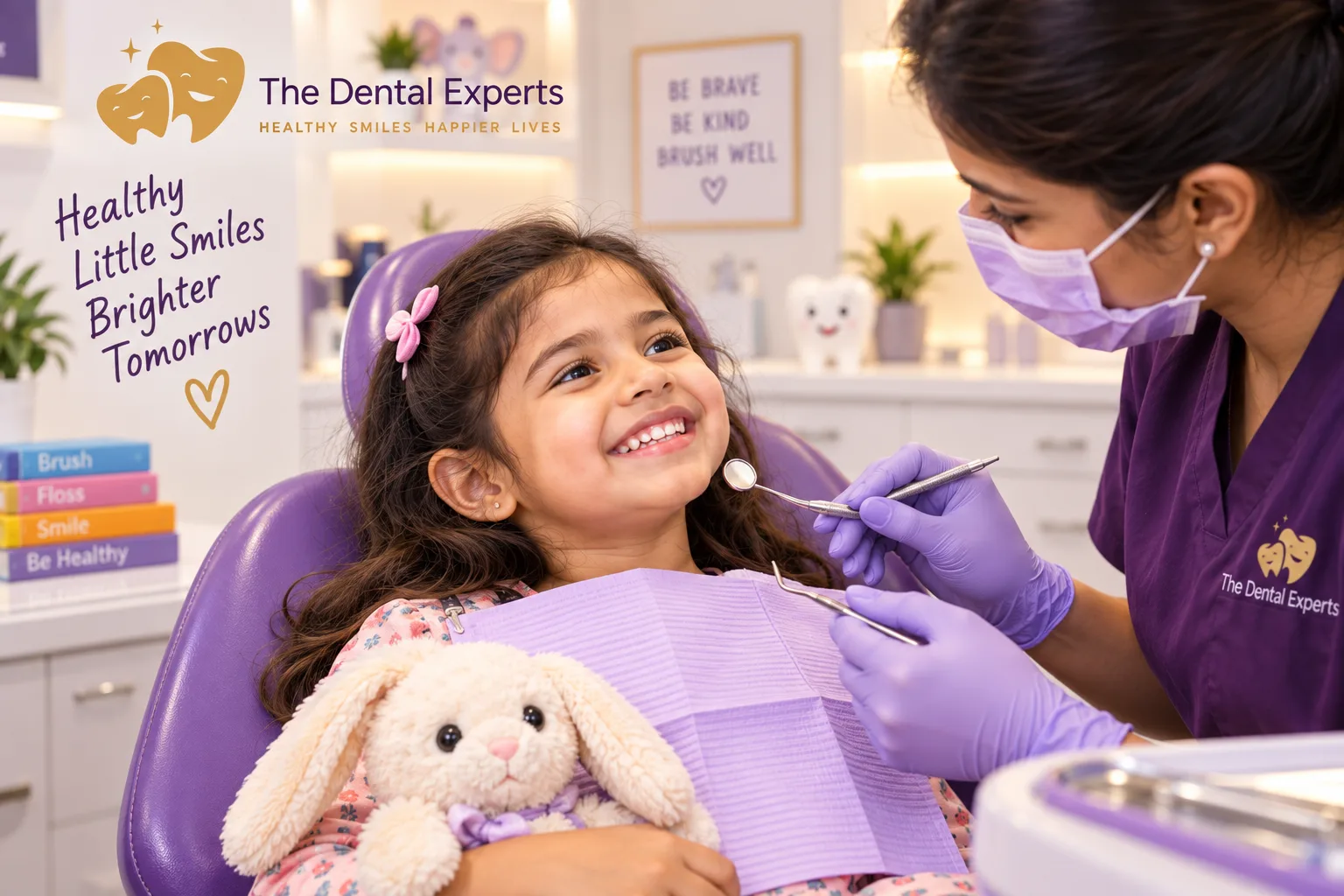
Children’s Dental Care at The Dental Experts, Nanakramguda
At The Dental Experts in Nanakramguda, Hyderabad, we care for children and families with an emphasis on prevention, clear guidance and comfortable dental visits. Parents looking for a children’s dentist or pediatric dental care near Nanakramguda, Gachibowli and the Financial District often have the same questions: When should brushing begin? How much toothpaste should a child use? When is the first dental visit due? And what can prevent cavities?
This guide answers those everyday questions and explains the habits that can protect a child’s teeth from infancy through the school years.
Why Children’s Oral Health Matters
Baby teeth are important for eating, speech and holding space for developing permanent teeth. Tooth decay can also cause pain and interfere with everyday activities, which is why prevention and early attention matter.
A healthy routine is usually built from simple things done consistently: brushing with fluoride toothpaste, limiting frequent exposure to sugary foods and drinks, and having dental visits at intervals appropriate for the child’s individual risk.
When Should a Child First Visit the Dentist?
The American Academy of Pediatric Dentistry recommends establishing a dental home within six months of the first tooth appearing and no later than 12 months of age. An early visit gives parents an opportunity to discuss brushing, fluoride, feeding habits, teething and injury prevention before problems develop.
After that, the dentist can recommend a recall schedule based on the child’s age, oral health and cavity risk rather than assuming the same interval is right for every child.
Brushing and Fluoride: Getting the Basics Right
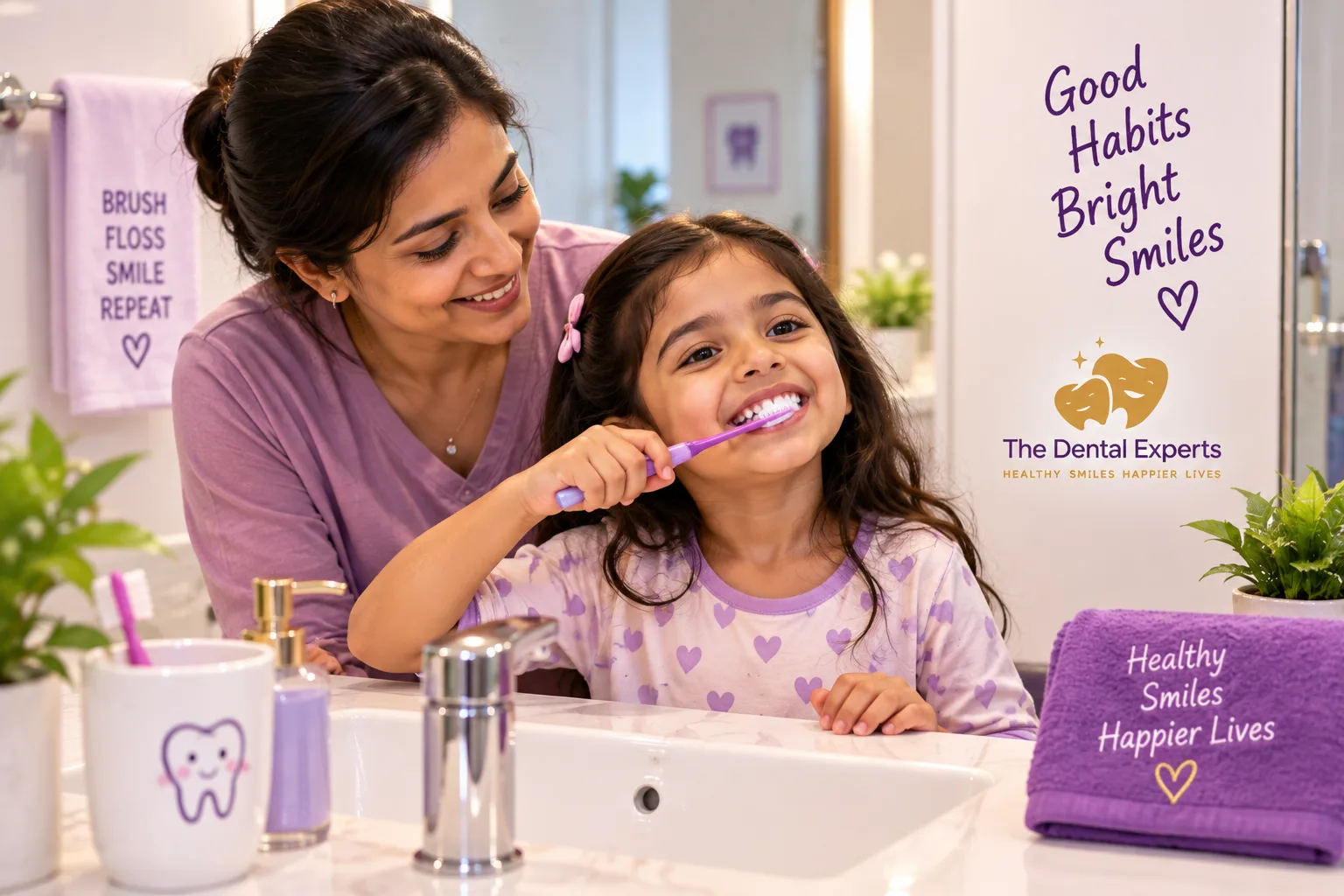
Start cleaning the mouth early and begin brushing when the first tooth erupts. For children younger than three, the AAPD recommends a smear or rice-sized amount of fluoride toothpaste. From ages three to six, use a pea-sized amount. Young children need adult help and supervision so the right amount is used and the teeth are cleaned effectively.
Brush twice daily, including before bed. As children become more independent, parents should continue checking their technique until they can brush thoroughly on their own. Cleaning between teeth becomes important where adjacent teeth touch; your dentist can demonstrate an age-appropriate method.
Food, Drinks and Cavity Prevention
Cavity risk is influenced not only by how much sugar a child consumes but also by how often teeth are exposed to sugary foods and drinks. Frequent sipping and snacking can repeatedly expose teeth to conditions that favour decay.
Keep water as the routine drink between meals, reserve sweets and sugary drinks for occasional use, and encourage balanced meals and snacks. Avoid putting a child to sleep with a bottle containing milk, formula, juice or other sugary liquids.
Common Dental Problems in Children
Parents commonly seek a kids dentist for tooth decay, toothache, sensitivity, chipped or injured teeth, gum problems, delayed or unusual tooth eruption, and concerns about the position of developing teeth. Habits such as prolonged thumb or finger sucking may also warrant assessment if they persist.
White, brown or black changes on a tooth, persistent bad breath, swelling, bleeding gums, pain while eating or a child repeatedly avoiding one side of the mouth are good reasons to arrange a dental assessment rather than waiting for the next routine visit.
Dental Sealants and Professional Fluoride
Some children benefit from additional preventive measures. Dental sealants can protect the grooves of susceptible back teeth, while professionally applied fluoride can help strengthen teeth in children at increased risk of decay. These measures are not identical for every child, so suitability should be decided after an examination and cavity-risk assessment.
Helping Children Feel Comfortable at Dental Visits
Parents can make dental visits easier by using simple, positive language and avoiding frightening descriptions of injections, drilling or pain. Treating a dental appointment as a normal part of staying healthy can help children approach it with less anxiety.
For a first visit, tell the dental team about previous difficult experiences, sensory sensitivities or particular fears. This gives the team an opportunity to adapt the visit to the child.
What to Do After a Dental Injury
Falls and sports injuries are common in childhood. If a tooth is broken, displaced or knocked out, contact a dentist promptly. A knocked-out permanent tooth is time-sensitive: hold it by the crown rather than the root, avoid scrubbing it, and seek urgent professional advice. A knocked-out baby tooth should not be replanted.
Facial swelling, uncontrolled bleeding, significant trauma, difficulty breathing or swallowing, or symptoms suggesting a serious infection require urgent medical or dental attention.
Finding a Pediatric Dentist in Hyderabad
Parents searching online for a “pediatric dentist near me”, “kids dentist in Hyderabad” or “children’s dentist near Gachibowli” are usually looking for more than treatment after a tooth starts hurting. Preventive guidance, early detection and a child-friendly approach can make dental care easier over the long term.
The Dental Experts is located in Nanakramguda, Hyderabad, convenient for families from Nanakramguda, Gachibowli and the Financial District. If you have questions about your child’s brushing, cavities, tooth development or a dental concern, an examination can provide advice specific to your child rather than relying on general online guidance.
Sources and further reading
This article provides general information and does not replace an individual dental examination.
← All articles